Part 1 — Running on Empty
By the time I reached the laundromat that morning, I was so exhausted I could barely remember walking there.
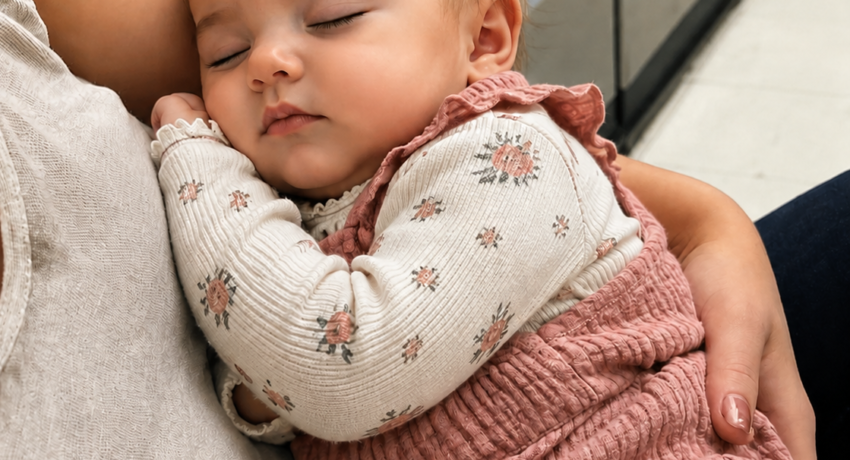
My seven-and-a-half-month-old daughter, Mia, was asleep against my chest, one tiny fist curled beneath her chin. I had just finished a long night shift at the pharmacy, and every part of my body felt heavy.
I told myself I only needed to stay awake long enough to wash one load of clothes.
That was all.
But somewhere between the steady hum of the machines and the warmth of my daughter breathing against me, my eyes closed.
When I woke up, every piece of laundry I owned had been washed, dried, and folded.
And when I opened the washer, I found something inside that made my knees weak.
But to understand why that moment meant so much to me, you have to understand what my life looked like then.
On paper, I worked day shifts at a neighborhood pharmacy.
In reality, I worked whatever hours were available.
If another technician called in sick, I volunteered.
If someone needed a shift covered, I took it.
If my manager offered overtime, I almost never said no.
It wasn’t because I loved working sixteen-hour stretches or coming home with aching feet.
It was because diapers cost money.
Formula cost money.
Rent cost money.
And lately, almost everything seemed to cost more than I had.
I had learned to divide life into two categories: things we absolutely needed and things that could wait until next week.
Sometimes groceries landed in the second category.
Sometimes my own shampoo did.
Mia’s needs never did.
She came first every single time.
Her father had disappeared from our lives before she was even born.
When I told him I was pregnant, he stared at me for a long time before finally saying, “I’m not ready for this life.”
As if parenthood were a job offer he could politely decline.
As if I had somehow been given a choice he hadn’t.
For a while, I waited for him to change his mind.
During my second trimester, I still checked my phone whenever it buzzed.
By the third trimester, I stopped.
Mia was born without him there.
And somehow, life kept moving.
It became the three of us: my mother, Mia, and me.
My mom was sixty-one and should have been enjoying quieter evenings, not waking at two in the morning to warm bottles while her daughter worked overtime.
But she never complained.
Not once.
Whenever I apologized, she’d wave me away.
“She’s my granddaughter,” she’d say. “You don’t have to thank me for loving her.”
That somehow made me feel more guilty.
Because my mother had already raised her children. She had already lived through sleepless nights, fevers, school runs, scraped knees, and teenage heartbreak.
She shouldn’t have had to start over because I needed help.
Still, she did.
And every time I left for work, I carried two feelings with me: enormous gratitude and the quiet fear that I was asking too much of her.
We lived in a small second-floor apartment in an aging building.
It wasn’t beautiful, but it was ours.
The rent was one of the few things I could still manage, though the apartment came without many conveniences.
One of them was a washing machine.
So every week or two, when the laundry basket became impossible to ignore, I loaded everything into a canvas bag and walked to the laundromat on the corner.
It was the kind of place most people passed without noticing.
A flickering neon sign hung in the window. The floor was always slightly sticky no matter how often someone mopped it, and half the plastic chairs had scratches carved into them.
But it was cheap.
And cheap mattered.
That morning, I came home after one of the hardest shifts I’d worked in months.
My eyes burned.
My shoulders hurt.
Even my fingers ached.
I opened the apartment door as quietly as I could and immediately saw the overflowing laundry basket.
For several seconds, I simply stared at it.
Then I almost laughed.
Of course.
Because apparently life had decided I wasn’t tired enough.
Mia stirred in my arms.
I looked down at her soft cheeks and whispered, “Looks like you and Mommy have one more adventure before bedtime.”
Mom was sleeping in her room.
She had been awake with Mia for much of the night while I worked, and I couldn’t bring myself to wake her.
She needed rest just as badly as I did.
So I packed the laundry, bundled Mia into her jacket, and headed back outside.
I remember telling myself that I could sleep afterward.
Just wash the clothes.
Get home.
Then sleep.
It sounded simple.
Part 2 — Just One Minute
The laundromat was nearly empty.
Rows of machines hummed beneath harsh fluorescent lights while the smell of detergent hung thick in the air.
Only one other person was there.
A woman who looked to be in her fifties was unloading clothes from a dryer when Mia and I walked in.
She glanced toward us and immediately smiled.
“What a beautiful little girl,” she said.
I looked down at Mia and managed a tired smile.
“Thank you.”
The woman’s expression softened when she looked at me.
At the time, I assumed she was simply being kind.
I had no idea she was paying closer attention than I realized.
She finished loading her clothes into a basket and left a few minutes later.
Then Mia and I were alone.
I emptied our canvas bag into one washer.
We didn’t own enough clothing to separate things by color or fabric.
My pharmacy shirts went in with towels.
Mia’s tiny onesies went in beside my jeans.
Her little elephant blanket disappeared beneath everything else.
I fed quarters into the machine and pressed the button.
Water began filling the drum.
I sank into one of the plastic chairs.
Almost immediately, Mia began fussing.
Not crying exactly.
Just making those soft, unhappy little noises every parent learns to recognize.
“Shh, sweetheart. Mommy’s here.”
I stood and rocked her slowly.
Back and forth.
Back and forth.
Her eyelids grew heavy again.
Then I realized I didn’t have a clean blanket to wrap around her.
Everything was in the washing machine except one thin receiving blanket that had been sitting near the top of the dirty laundry.
I shook it out as well as I could and wrapped it around her.
She nestled against me.
Her body was warm.
Her cheek rested against my chest.
I could feel each tiny breath through my shirt.
I sat down again.
My head felt like it weighed fifty pounds.
The washing machine turned steadily in front of me.
Round and round.
Round and round.
I remember leaning against the folding table behind the chairs.
“I’ll just close my eyes for a minute,” I whispered.
I genuinely believed it.
One minute.
Maybe two.
Then everything disappeared.
When I opened my eyes again, I had no idea how much time had passed.
For one terrifying second, I couldn’t remember where I was.
Then panic hit me.
Mia.
I looked down so quickly my neck hurt.
She was still in my arms.
Still sleeping.
Still safe.
Relief rushed through me so powerfully I nearly cried.
Then I noticed the sunlight.
It was brighter now, pouring through the laundromat windows at a completely different angle.
I’d been asleep much longer than a minute.
The machines were silent.
And something else was different.
My laundry was no longer inside the washer.
It was sitting on the folding table beside me.
Every single piece.
Clean.
Dry.
Folded.
Perfectly.
I stared at it.
My work shirts had been folded into neat squares.
Towels were stacked evenly.
Mia’s onesies had been arranged in tiny piles.
Even her elephant blanket was folded carefully on top.
Someone had removed our laundry, dried it, and folded it while I slept.
My first emotion wasn’t gratitude.
It was fear.
I looked around wildly.
Had someone touched Mia?
Had anyone taken something?
Why hadn’t I woken up?
But she hadn’t moved.
My bag was still there.
My wallet was still in my pocket.
Nothing seemed missing.
Then I looked toward the washer I’d used.
Its door was closed.
And there was something inside.
A lot of things.
I stood carefully, keeping Mia against my chest, and walked toward the machine.
Through the round glass door, I could see packages and boxes.
For a second, my exhausted brain couldn’t make sense of what I was looking at.
I pulled the door open.
Inside was an unopened pack of diapers.
A package of baby wipes.
Two cans of formula.
A soft fleece blanket.
And a stuffed elephant with long floppy ears.
Resting on top was a folded piece of paper.
My hands began trembling before I even opened it.
The note contained only a few words.
“For you and your little girl. — S.”
That was all.
No explanation.
No name.
Nothing else.
I stood there with the note in one hand and Mia in the other, unable to move.
Someone had seen us.
Not glanced at us.
Seen us.
Seen the exhaustion I was trying so hard to hide.
Seen the dirty blanket around my baby.
Seen a mother so tired she had fallen asleep in a laundromat because she couldn’t keep her eyes open for another second.
And instead of judging me, they had helped.
My throat closed.
I sat down and cried quietly.
I read the note again.
Then again.
“For you and your little girl.”
I looked around the empty laundromat.
Whoever S was, they were already gone.
Part 3 — The Mysterious “S”
When I returned home, Mom was awake.
The moment she saw the diapers, formula, wipes, blanket, and stuffed elephant spread across my bed, she froze.
“Where did all this come from?”
I handed her the note.
She read it slowly.
Her eyes filled with tears.
Then she sat beside me and touched the fleece blanket.
“There are still good people in this world,” she whispered.
I nodded, but I couldn’t speak.
I kept the note.
I put it on our refrigerator beneath a sunflower-shaped magnet.
Over the following week, I probably read those words fifty times.
They became strangely important to me.
Whenever I came home exhausted, I looked at that note.
Whenever another bill arrived, I looked at it.
Whenever I wondered whether I was failing as a mother because I was working too much and sleeping too little, I looked at it.
It reminded me that someone had seen me struggling and had chosen compassion instead of criticism.
I assumed that would be the end of it.
I was wrong.
About a week later, I came home after another double shift.
My feet were throbbing.
My back hurt.
All I wanted was to get upstairs, kiss Mia, eat something, and collapse.
Then I reached our apartment door.
A wicker basket was waiting outside.
For several seconds, I simply stood there staring.
I knew immediately.
Inside were groceries.
Oatmeal.
Bananas.
Crackers.
Several jars of baby food in different flavors.
And tucked among them was another note.
Same handwriting.
Same simple signature.
“You’re doing amazing. Keep going. — S.”
Something inside me broke open.
I laughed and cried at the same time.
Not a graceful kind of crying, either.
The kind where you try to breathe and end up making a strange little choking sound instead.
I pressed the note against my chest.
Who was S?
More importantly, how did this person know where I lived?
The first gift had happened at the laundromat.
But this was outside my apartment.
That night, after Mom and Mia were asleep, I sat at our tiny kitchen table with a pen and scrap of paper.
I wrote:
“Thank you. Please tell me who you are. I want to thank you properly.”
Then I slipped it beneath the doormat.
The next morning, it was still there.
The next evening, still there.
Three days passed.
Nothing.
A week passed.
Nothing.
Part of me began wondering whether S intended to remain anonymous forever.
Then, one morning, everything changed.
Part 4 — The Boy from the Back of the Classroom
I was coming home from work around seven in the morning when I noticed a man standing near the gate outside our building.
He looked nervous.
He kept shifting from one foot to the other and glancing toward the entrance as though trying to decide whether to leave.
When he saw me, he stopped.
Then he gave me a small, uncertain smile.
“Sarah?”
I froze.
There was something familiar about his face.
Older, certainly.
But familiar.
I stared for another second.
“Sean?”
His smile widened.
“Yeah.”
And suddenly, I was seventeen again.
Sean had gone to high school with me.
He was quiet.
Painfully quiet.
He sat near the back of English class and rarely raised his hand.
His clothes were usually a little too big or a little too small. Other kids noticed everything teenagers could possibly use against someone, and Sean had become an easy target.
They mocked the way he dressed.
The way he talked.
The way he avoided eye contact.
I never understood why people found cruelty so entertaining.
So when I could, I sat beside him.
When people laughed, I told them to stop.
Once, after a group of boys embarrassed him in the cafeteria, I found him sitting alone outside.
I remember telling him, “Don’t let people like that decide who you become.”
Then life moved on.
Graduation happened.
We went in different directions.
I hadn’t seen him in years.
Now he was standing outside my apartment building.
“You?” I whispered.
He rubbed the back of his neck.
It was exactly the same nervous gesture I remembered from high school.
“I hope I haven’t made things weird.”
I almost laughed.
“Sean, what’s going on?”
He hesitated.
Then he began.
“My mom uses the laundromat down the street sometimes. She lives a few blocks from here.”
A strange feeling moved through me.
“The woman who was there that morning?”
He nodded.
“Her name’s Lorraine.”
Suddenly, I remembered the warm smile.
The way she’d looked at Mia.
“What does your mom have to do with this?”
Sean took a slow breath.
“She called me after she left that morning.”
I said nothing.
“She told me she’d seen this exhausted young mother at the laundromat with a baby. She said the woman looked like she hadn’t slept in days but was still holding her little girl so carefully.”
My eyes began burning.
Sean continued.
“Mom said you reminded her of someone. Then after she thought about it, she realized who you were.”
“Me.”
He nodded.
“She remembered you from school.”
I stared at him.
Sean looked down for a moment before meeting my eyes again.
“When she told me it was you, I couldn’t stop thinking about it.”
“Sean…”
“You were the only person who was consistently kind to me back then.”
My chest tightened.
“The only one,” he repeated. “When everyone else laughed, you sat beside me. When people said things, you told them to stop. You made me feel like I wasn’t invisible.”
I shook my head slowly.
“I barely did anything.”
“To you, maybe.”
His voice grew quieter.
“To me, it was everything.”
That sentence hit me harder than I expected.
Sean glanced toward Mia, who was sleeping against me.
“When Mom told me what she saw, I just thought… maybe you needed someone to show up for you the way you once showed up for me.”
Suddenly, the laundromat returned to me.
The folded clothes.
The diapers.
The formula.
The stuffed elephant.
The first note.
Then the basket outside my door.
I stared at him through tears.
“You were S.”
Sean gave me a shy smile.
“Guilty.”
“Why didn’t you tell me?”
He shrugged.
“I didn’t do it because I wanted credit.”
“Sean, you spent money on us. You brought groceries. Formula. Diapers. You didn’t have to do any of that.”
“I know.”
“You don’t owe me anything.”
His expression changed.
Not dramatically.
Just enough for me to see the old teenage boy behind the adult standing in front of me.
“I know I don’t owe you.”
He paused.
“But I remember something you said to me once.”
I frowned.
“You told me not to let other people change who I was.”
I remembered.
Barely.
To me, it had been one sentence spoken outside school years ago.
To Sean, apparently, it had been something much bigger.
“I never forgot it,” he said. “Not once.”
Tears spilled down my cheeks.
He smiled gently.
“I figured maybe kindness works the same way. Maybe you pass it forward when you can. And sometimes, if you’re lucky, it finds its way back.”
I didn’t know what to say.
There are moments when “thank you” feels painfully inadequate.
This was one of them.
So I stepped forward and hugged him.
Carefully, because Mia was between us.
Sean laughed softly.
And for the first time in months, I felt something I hadn’t realized I was missing.
Not relief exactly.
Not security.
Hope.
Part 5 — Uncle S
After that morning, Sean became part of our lives in the quietest possible way.
He never pushed himself into our family.
He never behaved as though helping us gave him some claim over my time or attention.
He simply appeared when he could.
Sometimes he brought diapers.
Sometimes groceries.
Once, he came over and noticed the loose kitchen cabinet door that had been hanging crooked for months.
“Do you have a screwdriver?” he asked.
Twenty minutes later, it was fixed.
Another time, he repaired a leaking faucet that I’d been ignoring because I couldn’t afford to call someone.
He never made me feel helpless.
That mattered.
He helped without making me feel small.
Mom adored him.
Before long, she started calling him “Uncle S” whenever she talked to Mia.
“There comes Uncle S,” she’d announce when he knocked.
Sean would immediately turn red.
“Please don’t call me that.”
Which, of course, only encouraged Mom.
There was never anything romantic between Sean and me.
People sometimes assume that every meaningful connection between a man and a woman has to become a love story.
Ours wasn’t.
It was something quieter.
Something built from memory, gratitude, and a kind of friendship neither of us had realized could survive so many years apart.
And strangely, that made it feel even more special.
Sean didn’t return to my life because he wanted something from me.
He returned because, years ago, a lonely teenage boy had remembered what it felt like when one person chose kindness.
Then, when the opportunity came, he chose to become that person for someone else.
For me.
Months passed.
Mia grew.
She started sitting up on her own and trying to grab everything within reach.
She laughed whenever Sean made ridiculous faces at her.
Mom’s energy improved once my work schedule became slightly easier.
And slowly, life stopped feeling like something I was merely surviving.
Then one afternoon, my manager called me into his office.
Immediately, I assumed I’d done something wrong.
That’s what chronic stress does to you.
Someone says, “Can I speak with you?” and your brain immediately begins preparing for disaster.
Instead, he smiled.
“We’ve been watching how hard you’ve been working,” he said. “You’ve covered shifts, you’ve been reliable, and customers like you.”
I waited.
“We’re moving you to more consistent hours.”
I blinked.
“And there’s a small raise.”
For several seconds, I genuinely thought I had misunderstood him.
“A raise?”
He nodded.
Then he added, almost casually, “Someone also called recently to recommend you. Said you were one of the hardest-working and most dependable people they knew.”
My heart skipped.
“Who?”
My manager smiled.
“They asked me not to say.”
I didn’t need him to.
I knew.
That evening, I walked home feeling lighter than I had in a long time.
Not because the raise solved every problem.
It didn’t.
There were still bills.
There would still be exhausting days.
Single motherhood hadn’t suddenly become easy.
But for the first time in a long while, I could imagine breathing without constantly calculating what disaster might come next.
When I walked into the apartment, Mia was sitting on the floor with Mom, banging two plastic cups together like cymbals.
She squealed when she saw me.
I dropped my bag and scooped her up.
Then my eyes landed on the refrigerator.
The original note was still there beneath the sunflower magnet.
The paper had begun to curl slightly at the edges.
The ink wasn’t quite as dark as it had been.
But the words were still perfectly readable.
“For you and your little girl. — S.”
I touched the note with my fingertips.
Then I smiled.
Part 6 — Kindness Has a Long Memory
For years, I thought kindness was something small.
You help someone carry books.
You sit beside the person everyone else avoids.
You defend someone when people are laughing.
You offer a few encouraging words.
Then the moment passes.
Everyone goes home.
Life moves on.
You assume the act disappears with it.
But I know better now.
Kindness doesn’t always disappear.
Sometimes it stays with people.
Quietly.
It follows them through years you know nothing about.
It becomes part of the way they see themselves.
The strange thing is that I couldn’t even remember every moment Sean remembered.
To me, sitting next to him in English class hadn’t been extraordinary.
Telling people to leave him alone hadn’t felt heroic.
I hadn’t expected gratitude.
I certainly hadn’t expected that years later, while I was exhausted, broke, and terrified that I wasn’t doing enough for my daughter, those small choices would return to me in the form of folded laundry, baby formula, groceries, and two handwritten notes.
Sean never saved my life.
I don’t want to exaggerate what happened.
But he did something I desperately needed.
He reminded me that I wasn’t invisible.
He reminded me that asking nothing from the world doesn’t mean the world has forgotten you.
He reminded me that even when life feels brutally lonely, there may be people carrying memories of your goodness that you don’t even know exist.
And most importantly, he taught me something about the kind of person I want Mia to become.
Someday, when she’s old enough to understand, I’ll show her the faded note on our refrigerator.
I’ll tell her about the morning her mother was so exhausted she fell asleep in a plastic laundromat chair with a dirty blanket wrapped around her.
I’ll tell her about a woman named Lorraine who noticed.
I’ll tell her about a shy teenage boy named Sean who grew into a man with a generous heart.
And I’ll tell her that years before she was born, I once defended that boy because I thought it was the right thing to do.
Not because I expected anything back.
That’s the part I want her to remember.
Do good anyway.
Be gentle anyway.
Stand beside the lonely person anyway.
Speak when everyone else stays silent.
Help when no one is watching.
Because you may never know what your kindness means to someone.
You may never see the day they remember it.
You may never witness the way it shapes them.
But sometimes, years later, kindness finds its way back to your door.
Sometimes it appears in a wicker basket.
Sometimes it waits inside a washing machine beside a stuffed elephant.
And sometimes it comes from someone you once helped without even realizing how much they needed you.
I used to think goodness disappeared once the moment was over.
Now I believe something different.
Goodness has a long memory.
It waits quietly.
Patiently.
And every once in a while, when you need it most, it finds its way home.
Note: This story is a work of fiction inspired by real events. Names, characters, and details have been altered. Any resemblance is coincidental. The author and publisher disclaim accuracy, liability, and responsibility for interpretations or reliance. All images are for illustration purposes only.